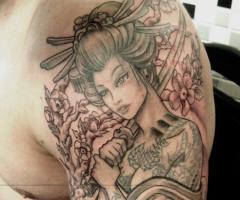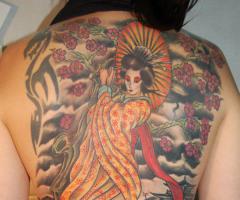
Since ancient times Japanese people the tattoo was regarded as sacred and related to magic with prophylactic purposes. The first inhabitants of Japan left some hints to make us think tattoo was a current activity there, but the use of tattoo was consigned to the oblivion after being socially condemned under the influence of the Chinese culture during centuries. Only local mafia members (Yakuza) and outcasts were encouraged to wear tattoos publicly. This environment concealed the tattoos and made them appear as something undesirable, but the time brought along a change in the uses and minds of the people, giving a new birth to the art of tattoos.
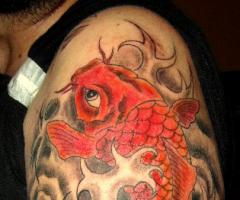
Koi fish (carp) is one of the most popular designs favored by the Japanese people. The legend tells that a koi had to struggle during long time with a unfavorable current till it came to its upstream goal, the Gates of Heaven, where it turned into a splendid dragon and flew to the skies. This legend praises the power of the will in the spiritual realms, including the material achievement that a strong character can get when it is decided to go on till the end. This pattern is especially beautiful: bright-colored and styled, the figure of the koi has many adherents and is suitable for both men and women.
This mask can be traced back to their roots in the traditional Japanese theatre, Kabuki. The Kabuki actors wear masks representing a certain character and can be easily recognized by the audience. There are marks for good and evil personages; in this case the Hannya masks represent a demon; they can depict a female character consumed by hate over her man. The purpose of the Hannya mask, as to some extent to the dragons, is to ward off against evils and endue the person who wears it with good luck.
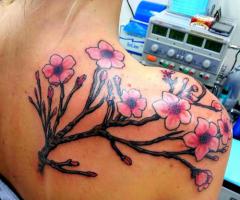
The Cherry Blossom that liven up the Japanese gardens are the cherished image by people from all the world related to Japan, but cherry blossom have a deeper meaning in the Japanese culture: the symbolize the life itself. Along with a delicate beauty, the cherry blossoms have the virtue of endure Nature hardnesses like snow, and bloom in the worst weather condition. Although they are fragile and ephemeral, they are precious and delight the eyes of the gardener and the passer-by. Therefore, they stand for courage, beauty and endurance; they summarise the continuous force of the life. The lesson of the cherry blossom is to treasure every moment in your life, even the saddest and live life to its full meaning.

Eternally associated to Japan, the dragon stands like a powerful symbol in Japanese culture. The essence of this mythical creature involves deep values like freedom, supernatural forces, wisdom, brave heart, wisdom and strength. Other meanings are fertility, humidity, and protection against the evil. A dragon in Japanese culture is always a positive symbol.
You can also browse for famous Japanese artist like Horiyoshi III and Shodai Horiyoshi of Yokohama